The Science Behind OMIUS
200,000 years of evolution built a radiator on your forehead. OMIUS makes it work better.
Your forehead sits within one of the body's most powerful cooling zones: hairless, vein-rich, and exquisitely thermosensitive. Every OMIUS product is engineered around this anatomical fact.
Overview
What This Article Covers
This is a long, detailed piece. Here is what it argues, and what it does not.
What the evidence supports:
- The forehead and upper face have the highest sweat gland density (~360 glands/cm²), are rich in arteriovenous anastomoses (specialized heat-exchange vessels), and are 2–5× more thermosensitive than any other body region for triggering whole-body thermoregulatory responses.
- The head can dissipate approximately 130 W of heat during moderate exercise, far more than the brain produces (~15–20 W).
- Head and face cooling during exercise consistently improves thermal comfort and, in many studies, extends exercise capacity, even without changing core body temperature.
- Insulating headgear, particularly larger coverings like wool caps, reduces the head's heat dissipation capacity.
- Evaporative cooling systems offer practical advantages over ice for sustained per-cooling during exercise: they are lighter, continuously replenishable, and on AVA-rich surfaces like the forehead, they operate at moderate temperatures that keep vascular heat-exchange channels open.
What remains an open question:
- Whether cooled blood from the scalp surface reaches the brain through emissary veins in quantities sufficient to lower brain temperature (the selective brain cooling hypothesis) is actively debated. The anatomical pathway exists and flow reversal during hyperthermia has been documented, but direct measurements of deep brain temperature have not shown a cooling effect from face fanning.
- Biophysical models predict that external cooling can only affect the outer ~1.5–3.6 mm of cortex. Whether this thin superficial gradient is functionally meaningful has not been tested in exercising humans.
- The prolactin suppression observed with face cooling may reflect direct cortical cooling, trigeminal nerve signaling, or both. The evidence does not yet distinguish between these explanations.
What OMIUS claims, and does not claim:
Whether OMIUS contributes to cooling at the cortical surface is plausible based on the underlying anatomy and biophysics, but has not been directly measured in exercising humans. What is well established is that OMIUS amplifies evaporative heat dissipation at the forehead, the body's most thermally sensitive surface, through a thermally conductive graphite interface designed to work with the body's vascular heat-exchange architecture rather than against it. The product's rationale rests on three mechanisms consistent with established physiology: amplified evaporation, conductive heat transfer through AVA-rich skin, and thermoregulatory signaling from facial cooling.
Section 01
Evolution's Radiator
In 1990, anthropologist Dean Falk proposed the Radiator Hypothesis: the evolution of enlarged emissary veins in the skull allowed our ancestors to cool their expanding brains, enabling the cognitive leap that made us human. Whether this cooling pathway remains functionally active in modern humans during exercise is an open question explored in Section 02.
The forehead is uniquely designed for cooling
Three independent lines of evidence converge on the forehead as one of the body's most favorable surfaces for heat dissipation:
- Highest sweat gland density — Up to 360 glands/cm², far exceeding the torso or limbs.
- Most thermosensitive skin — In open-loop human experiments, the face was 2–5× more thermosensitive than any other body segment for sweating and thermal discomfort.
- Hairless and vascularized — Direct evaporation with minimal insulation.
Sources: Shibasaki 2010, Cotter 2005, Falk 1990
Shibasaki M, Crandall CG. "Mechanisms and controllers of eccrine sweating in humans." Front Biosci (Schol Ed). 2010;2:685-696. → PubMed
Cotter JD, Taylor NAS. "The distribution of cutaneous sudomotor and alliesthesial thermosensitivity in mildly heat-stressed humans." J Physiol. 2005;565(Pt 1):335-345. → PubMed
Falk D. "Brain evolution in Homo: The 'radiator' theory." Behav Brain Sci. 1990;13(2):333-344. → DOI
Sweat Gland Density by Body Region
Current numbers shown as approximate sweat gland density comparisons, with cooling-relevant notes alongside each region.
Sources for regional sweat gland density and thermosensitivity
Baker LB. "Physiology of sweat gland function: The roles of sweating and sweat composition in human health." Temperature. 2019;6(3):211-259. → PMC
Cotter JD, Taylor NAS. "The distribution of cutaneous sudomotor and alliesthesial thermosensitivity in mildly heat-stressed humans." J Physiol. 2005;565(Pt 1):335-345. → PubMed
Note: values shown here are approximate regional sweat gland density comparisons.
The Face Is Not Just a Cooling Surface — It Is a Control Surface
Cotter & Taylor tested ten body sites under open-loop conditions, meaning the rest of the body was thermally clamped so they could isolate how each local skin region influenced thermoregulation. That matters because it avoids the usual confounding problem where the whole body starts compensating and muddies the result.
Their key finding was striking: the face was 2–5 times more thermosensitive than any other body segment for both sweating and whole-body thermal discomfort. In plain English, the thermoregulatory system gives facial skin disproportionate weight.
That does not mean every square centimetre of the face is identical. But it does mean the forehead sits inside a privileged facial zone that the body monitors aggressively when deciding whether it is getting too hot.
Source: Cotter & Taylor 2005
Cotter JD, Taylor NAS. "The distribution of cutaneous sudomotor and alliesthesial thermosensitivity in mildly heat-stressed humans: an open-loop approach." J Physiol. 2005;565(Pt 1):335-345. → PubMed
Note: the paper reports the face as the most thermosensitive region tested; the forehead is part of that facial zone, not a separately isolated site in the headline result.
Stanford AVA Research: The Three Heat Portals
Stanford researchers Heller & Grahn identified three regions rich in arteriovenous anastomoses — the palms, soles, and upper face. These are not ordinary skin surfaces. They are privileged heat-exchange portals.
Arteriovenous anastomoses (AVAs) are short, specialized vascular shunts that let blood move directly from small arteries into veins, bypassing the usual capillary route. That architecture allows the body to move heat quickly to the skin surface when it needs to dump heat fast.
That matters for OMIUS because the upper face / forehead is not just sweaty skin — it is part of a specialized vascular heat-exchange zone.
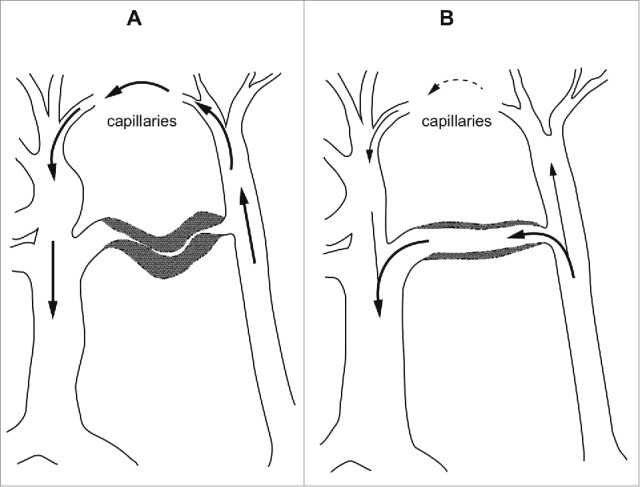
Simple AVA diagram: when the shunt opens, blood can move directly from artery to vein, bypassing capillaries. That makes AVA-rich regions especially effective for rapid heat exchange.
Sources: Walløe 2016, Grahn et al. 2005
Walløe L. "Arteriovenous anastomoses in the human skin and their role in temperature control." Temperature. 2016;3(1):92-103. → PMC
Grahn DA, Cao VH, Heller HC. "Heat extraction through the palm of one hand improves aerobic exercise endurance in a hot environment." J Appl Physiol. 2005;99(3):972-978. → PubMed
Note: Grahn et al. directly demonstrated the principle using palm cooling. The AVA anatomy shown here helps explain why the palms, soles, and upper face are privileged heat-exchange surfaces.
Section 02
The Blood Highway
Cooling the forehead only matters if that thermal effect can travel inward. Human anatomy provides a plausible route, but how much cooling actually reaches the brain through it remains one of the open questions in thermal physiology.
The Anatomy Is Real
In 1985, Cabanac & Brinnel used Doppler recordings to show that during hyperthermia, blood in the mastoid and parietal emissary veins flows from skin to brain. In cold conditions, that flow slowed, disappeared, or reversed. The skull is not a sealed thermal barrier. Under heat stress, venous blood from the surface of the head can be routed inward through valveless emissary veins.
Zenker & Kubik later broadened that picture anatomically, showing that the scalp, face, dura, and cranial venous plexuses form a wider transport network — and that subarachnoid arterial branches in humans have diameters comparable to vessels found in the carotid rete of animals where selective brain cooling is well established.
Sources: Cabanac & Brinnel 1985, Zenker & Kubik 1996
Cabanac M, Brinnel H. "Blood flow in the emissary veins of the human head during hyperthermia." Eur J Appl Physiol. 1985;54(2):172-176. → PubMed
Zenker W, Kubik S. "Brain cooling in humans — anatomical considerations." Anat Embryol. 1996;193(1):1-13. → PubMed
The Debate: How Much Cooling Gets Through?
The existence of the anatomical route is not disputed. What is disputed is whether the thermal transfer through it is large enough to meaningfully cool the brain.
The case for selective brain cooling in humans was championed by Cabanac and colleagues over several decades. Their evidence rests primarily on the observation that tympanic temperature — measured at the eardrum, close to the brain — drops below core body temperature during hyperthermia with face cooling. They interpret this as evidence that cooled venous blood from the head surface reaches the intracranium and lowers brain temperature.
However, prominent researchers have challenged this interpretation. Nybo & Secher (2011) measured jugular venous blood temperature directly and found it was always hotter than arterial blood during exercise — even with face fanning — suggesting the brain is adding heat, not being selectively cooled. Simon (2007) reached a similar conclusion, arguing that tympanic temperature is not suited to indicate selective brain cooling in humans.
Perhaps the most striking data point comes from Shiraki et al. (1988), who obtained direct brain temperature measurements in a patient with an implanted drainage catheter. Face fanning did reduce tympanic temperature — but brain temperature was unaffected. It tracked esophageal temperature instead.
Sources: Nybo & Secher 2011, Simon 2007, Shiraki et al. 1988
Simon E. "Tympanic temperature is not suited to indicate selective brain cooling in humans." Eur J Appl Physiol. 2007;101(1):19-30. → PubMed
Nybo L, Secher NH. "Counterpoint: Humans do not demonstrate selective brain cooling during hyperthermia." J Appl Physiol. 2011. → Full text
Shiraki K et al. "Independence of brain and tympanic temperatures in an unanesthetized human." J Appl Physiol. 1988. → PubMed
What the Measurements May Be Missing
There is a possibility that both sides of the debate are partially right — and that the disagreement stems from what is being measured rather than what is happening.
The evidence against selective brain cooling comes primarily from two kinds of measurement: jugular venous blood temperature and deep brain temperature. Jugular venous blood is a composite outflow from the entire brain, mixing drainage from deep structures heavily perfused by arterial blood with drainage from superficial cortical regions closer to the skull. A modest cooling effect at the cortical surface would be diluted into the jugular average and might not register.
Similarly, Shiraki's direct measurement was taken in the lateral ventricle — deep brain, surrounded by cerebrospinal fluid, thermally dominated by the ~750 mL/min of arterial blood perfusing the brain. A gradient of 0.2–0.3°C at the cortical surface a few millimeters from the skull and emissary veins would not necessarily appear in ventricular readings.
Biophysical modeling supports this concern quantitatively. Zhu et al. (2006) calculated the “temperature shielding length” of cerebral blood flow — the depth beyond which perfusion overwhelms any surface cooling effect. For normal adult gray matter perfusion, that shielding length is approximately 3.6 mm. In other words, external cooling is physically predicted to affect only the outer few millimeters of cortex before being washed out by arterial blood flow. Deeper measurements — jugular venous, ventricular, or even large MRS voxels — would not detect a gradient confined to this thin zone.
Nelson & Nunneley (1998), the most frequently cited modeling paper against head cooling, reached a similar conclusion: surface cooling affects only the most superficial cerebrum (≤1.5 mm). The authors judged this too thin to matter clinically — but for the present question, the point is that even their model predicts a gradient exists; it simply falls below the resolution of conventional measurements.
Direct human evidence confirms that the brain is not thermally uniform. Stone et al. (1997) measured temperature at multiple depths in the temporal lobe of 39 neurosurgical patients and found a 1.4°C drop between 2 cm and 1 cm depth(P < 0.001), with temperatures falling further toward the cortical surface. This was under operative conditions (exposed brain), but it demonstrates that the cortical surface is a thermally distinct compartment from deeper structures — a fact that any deep-brain measurement would miss entirely.
In other words, the existing measurements may be answering the wrong question. They convincingly show that face cooling does not lower deep brain temperature. But they do not rule out a thermal gradient at the cortical surface — and the cortical surface is where much of what matters for exercise performance actually happens.
This is speculative — no study has directly measured cortical surface temperature gradients during head cooling in exercising humans with intact skulls. But it is a physiologically coherent hypothesis that is consistent with the anatomical evidence (emissary veins connect surface vasculature to the dura and cortical venous drainage), the biophysical modeling (Zhu 2006, Nelson & Nunneley 1998), the neurosurgical gradient data (Stone 1997), and the performance data (head and face cooling consistently improve exercise capacity in ways that may not be fully explained by changes in core temperature alone). Future research using high-resolution MR thermometry could potentially resolve this question.
What Is Not Disputed
- • The head is a powerful heat-dissipation surface.
- • Emissary vein flow reversal during hyperthermia is documented.
- • The forehead sits inside the most thermosensitive region of the body, with the highest sweat gland density and AVA-rich vasculature.
- • Larger insulating head coverings such as a wool cap can measurably reduce head heat dissipation during exercise. The effect of smaller coverings like a headband is less clear.
The practical implication for OMIUS does not depend on resolving the selective brain cooling debate. Whether cooled venous blood reaches deep brain structures or whether the benefit operates primarily through surface heat dissipation and thermoregulatory signaling, the forehead remains a particularly effective site for removing heat from the head. What matters is that you do not block it — and ideally, that you amplify it.
Note: The selective brain cooling hypothesis remains an active area of scientific discussion. Whether enhanced forehead cooling contributes to cooling at the cortical surface is plausible given the anatomical pathways and biophysical modeling, but has not been directly demonstrated in exercising humans. OMIUS enhances evaporative heat dissipation at the body's most thermally privileged surface, and the demonstrated benefits of which do not depend on resolving this question.
Section 03
What Happens When You Cover the Head
In 1993, Rasch & Cabanac ran a small but well-designed intervention study asking a straightforward question: what happens to head heat loss when you cover it with common sports headgear during exercise? Four subjects exercised into moderate hyperthermia under three conditions (bare head, a conventional textile headband, and a wool cap) while the face was cooled with a fan to simulate outdoor convection.
Four subjects exercised into moderate hyperthermia under three conditions — bare head, a conventional textile headband, and a wool cap — while the face was cooled with a fan to simulate outdoor convection.
The Heat Loss Finding
The clearest result was the direct measurement of heat dissipation from the head. Wearing the wool cap significantly reduced heat loss from the covered area compared to the bare-head control at rest and at 50 W and 100 W exercise loads. The headband did not produce a statistically significant reduction in total measured heat loss, though the area it covered was much smaller (~220 cm² vs. ~910 cm²).
This finding is straightforward and does not depend on any interpretive framework: insulating fabric on the head reduces the head's ability to shed heat. That matters because the head's total heat loss capacity during exercise is substantial. The same research group measured it at approximately 130 W at 150 W exercise load in a companion study (Rasch et al. 1991), far exceeding the brain's own metabolic heat output of 15–20 W.
The Temperature Pattern
The study also tracked tympanic temperature (measured at the eardrum) and esophageal temperature (a core-body measure). In the bare-head condition, tympanic temperature was 0.55 ± 0.08°C lower than esophageal temperature at the end of exercise at 150 W — a statistically significant gap.
Under both headgear conditions, that gap narrowed and was no longer statistically significant: 0.15 ± 0.31°C for the headband and 0.30 ± 0.13°C for the cap.
The authors interpreted this narrowing as evidence that headgear hinders selective brain cooling. However, as discussed in Section 02, tympanic temperature is a contested proxy for brain temperature. Critics such as Nybo & Secher (2011) and Simon (2007) argue that tympanic readings are influenced by head skin temperature rather than reflecting actual brain temperature. Under that interpretation, the narrowing gap may simply reflect warmer skin under the headgear rather than a change in brain temperature.
The honest reading is that both interpretations are plausible and the study cannot distinguish between them.
Limitations
This was a four-subject study. The headband result in particular showed high variability (± 0.31°C), making it difficult to draw firm conclusions about the relative effect of different headgear types. The study should be read as directional evidence, not definitive proof.
What This Means for OMIUS
The heat loss finding, not the temperature pattern, is what matters most for OMIUS. What Rasch & Cabanac demonstrated most clearly is that the wool cap, covering approximately 910 cm² of the head, significantly reduced head heat dissipation during exercise. The headband, covering a much smaller area (~220 cm²), did not always produce a statistically significant reduction in total measured heat loss, though it still appeared to affect the temperature pattern. The broader point holds: insulating headgear can interfere with the head's cooling capacity, and the larger the coverage, the greater the impact.
OMIUS was not tested in this study. The headgear tested (a standard textile headband and a wool cap) are thermal insulators. OMIUS is designed to do the opposite: its thermally conductive graphite interface is meant to amplify evaporative heat loss from the forehead, not block it. The question this paper raises for any headgear is simple: does it help or hinder the head's natural cooling capacity? Insulating fabrics hinder it. OMIUS is engineered to enhance it.
Full citation: Rasch & Cabanac 1993
Rasch W, Cabanac M. "Selective brain cooling is affected by wearing headgear during exercise." J Appl Physiol. 1993;74(3):1229-1233. → Read on PubMed
Section 04
Why the Brain Needs Help
Your brain is 2% of your body mass but produces 20% of your metabolic heat, roughly 15 watts. During exercise, the problem gets worse: muscles flood the bloodstream with heat, and the brain has no way to sweat from the inside.
The Overheating Problem
Nybo (2002) showed that during prolonged exercise, jugular venous blood is actually hotter than arterial blood, meaning the brain is adding heat faster than the body can remove it. This is the same finding discussed in Section 02 in the context of the SBC debate, but the implication here is different: regardless of whether selective brain cooling exists, the brain's internal heat removal during exercise is inadequate. External heat dissipation from the head surface is not optional; it is necessary.
Source: Nybo 2002
Nybo L. "Hyperthermia and fatigue." J Appl Physiol. 2008;104(3):871-878. → Read on PubMed
The Efficiency Equation
The brain produces ~15W of heat continuously, and during exercise the body's overall thermal load climbs dramatically. The head's total heat dissipation capacity is approximately 130 Wat moderate exercise intensity (Rasch et al. 1991), a substantial fraction of total body heat loss. Even modest improvements in head cooling efficiency matter: because the forehead is the body's most thermosensitive surface, enhanced heat removal there has an outsized effect on thermoregulatory drive, thermal comfort, and the body's ability to sustain performance in the heat.
Temperature × Performance
Heat doesn't affect all runners equally. Elites have superior thermoregulation; everyday athletes pay a much steeper price.
How Heat Slows Marathon Runners
Performance decline by finish time
Performance vs. temperature by runner level (Ely et al. 2007). The slower the runner, the greater the heat penalty.
Ely et al. 2007
Dataset: 7 marathons (Boston, NYC, Twin Cities, etc.), 140 race-years.
Key finding: Slower runners suffer far more from heat. Elites lose 0.9% per 5°C, but 300th-place runners (~3h marathoners) lose 3.2% per 5°C — a 23-minute penalty from cool to hot conditions.
→ PubMedEl Helou et al. 2012
Dataset: 1,791,972 finishers across 6 major marathons (2001–2010).
Key finding: Optimal air temp: 3.8–9.9°C. Speed loss is quadratic— it accelerates. Chicago 2007 at 25°C: 30.7% of runners didn't finish.
→ PubMedRacinais et al. 2022
Dataset: 1,258 races, 42 countries, 7,867 athletes (1936–2019).
Key finding: Air temperature is the #1 weather factor (40% importance). Performance drops 0.3–0.4% per degree outside optimal (7.5–15°C WBGT).
→ PubMedWhy This Matters for OMIUS
The fan-out effect is critical: everyday athletes lose 3–4× more performance per degree of heat than elites. These are exactly the athletes who need thermal management the most, and who may have the most room to benefit from effective cooling strategies.
Face and Head Cooling Works, Even When Core Temperature Doesn't Change
Whatever the mechanism, the performance evidence for head and face cooling during exercise is substantial and growing. A 2025 systematic review and meta-analysis by Stevens et al. examined 63 controlled studies involving 618 participants and found that head, face, and neck cooling consistently reduced skin temperature at the target site and improved thermal sensation and comfort. The pooled effect on exercise performance was compatible with no effect to medium beneficial effects, with no harmful effects reported. The authors concluded that cooling the head, face, and neck produces strong perceptual effects that contribute to improved performance.
Several individual studies show larger and more specific effects. Ansley et al. (2008) found that head cooling during cycling at 75% VO₂max improved time to fatigue by 51%, a dramatic result. Critically, head cooling had no effect on rectal temperature. What it did change was the neuroendocrine response: head cooling largely abolished the prolactin response that normally accompanies exercise-induced hyperthermia. Prolactin release is a marker of central serotonergic activity associated with central fatigue, and its suppression by head cooling, without any change in core temperature, suggests that something is happening at the level of the brain itself. The authors concluded there were no indications of peripheral mechanisms of fatigue and pointed to the importance of central mechanisms.
A methodological note: the Ansley and Stevens results use time-to-exhaustion (TTE) protocols, which measure how long a subject can sustain a fixed workload. TTE protocols typically produce larger apparent effect sizes than self-paced time trials, because small changes in fatigue perception can substantially extend endurance at a set intensity. These results should not be interpreted as equivalent to race-like time-trial performance gains, which tend to be smaller in magnitude.
Stevens et al. (2017) demonstrated that the combination of water spraying and fanning the head and face improved cycling time to exhaustion by 51%. Luo et al. (2022) reviewed 49 studies and confirmed that both head/face and neck cooling can effectively improve athletic performance in the heat, primarily by reducing perceptual strain.
The OMIUS Headband: What Has Been Tested
One peer-reviewed study has directly evaluated the OMIUS headband. Jolicoeur Desroches et al. (2024) tested 10 trained male runners in a crossover design at 35°C and 56% humidity, comparing the OMIUS headband against a sham. The headband produced significant forehead cooling (p = 0.007) and significantly improved forehead thermal comfort (p = 0.008) during 70 minutes of submaximal running. However, in a subsequent 5-km time trial, no statistically significant performance improvement was found.
Several design features of the study are important for interpreting this result. The headband was not re-wetted during the time trial, a limitation the authors themselves acknowledged. Baseline rectal temperatures were 0.11°C higher in the OMIUS condition before headband placement, a pre-existing difference unrelated to the headbands.
And with 10 participants, the study's minimum detectable effect was approximately 5%, larger than any legal ergogenic aid has demonstrated in running TT research. The observed trend was 2.2% (24 seconds), consistent with other cooling interventions but below the study's detection threshold. The study supports local cooling and improved comfort; performance effects under that protocol remain uncertain and warrant larger trials.
Why This Pattern Matters
The recurring finding across these studies is striking: head and face cooling improves performance without changing core temperature. This creates an apparent paradox: how can cooling the face improve endurance by 50% if it doesn't cool the body?
Three explanations are possible, and they are not mutually exclusive:
First, thermoregulatory signaling. As discussed in Section 01, the face has 2–5× the thermosensitivity of other body regions. Cooling it reduces perceived thermal strain, which in turn modulates voluntary pacing and extends exercise tolerance (Cheung 2010). This mechanism is well established.
Second, cortical surface cooling. As discussed in Section 02, existing measurements of brain temperature (jugular venous blood, ventricular probes) capture deep brain temperature but may miss thermal gradients at the cortical surface, where the motor cortex, prefrontal cortex, and insular cortex reside. The Ansley prolactin finding is noteworthy in this context: prolactin release is driven by hypothalamic serotonergic pathways, and its abolition by head cooling without any change in core temperature is consistent with, though does not prove, a direct thermal effect on brain tissue. One possible interpretation is that subtle cooling of the cortical surface, invisible to jugular or ventricular measurements, could play a role. However, a purely neural explanation is at least equally plausible: Mündel et al. (2006) showed that face cooling abolishes the prolactin response even during passive heating without exercise, suggesting the effect may be mediated by facial skin thermoreceptors signaling through the trigeminal nerve to the hypothalamus, rather than by a cortical thermal gradient. Both mechanisms remain open, and they are not mutually exclusive.
Third, combined effects. Real-world head cooling likely operates through multiple pathways simultaneously: real heat removal from the head surface, thermoregulatory signaling from facial thermoreceptors, and possibly a degree of cortical cooling that current measurement methods cannot resolve.
For OMIUS, the practical conclusion is the same regardless of which pathway dominates: head and face cooling during exercise can produce meaningful performance benefits in some settings, and amplifying the forehead's natural evaporative capacity is a physiologically sound way to deliver that cooling.
Sources: Stevens et al. 2025, Ansley et al. 2008, Stevens et al. 2017, Luo et al. 2022, Cheung 2010
This section synthesizes the literature you added on head/face cooling performance effects, central fatigue markers, and thermal perception during exercise in the heat.
Section 05
Ice, Temperature, and the Cooling Dose Problem
Ice-based cooling strategies (vests, towels, cold water immersion, ice caps) are widely used in sport and many have demonstrated real benefits. Pre-cooling with ice vests can reduce thermoregulatory strain; ice caps have been shown to modestly improve 5 km performance in the heat; and meta-analyses confirm that external pre-cooling as a category improves endurance performance in hot conditions (Bongers et al. 2015). Ice works. But ice is not universally optimal, and where, when, and how much cold is applied matters enormously.
The AVA Question
Stanford researcher Craig Heller identified a specific mechanism relevant to cooling at AVA-rich sites like the palms, soles, and upper face. Arteriovenous anastomoses, the specialized shunts that allow rapid heat exchange, close when local skin temperature drops below approximately 24°C. When ice is applied directly to these sites, the very vessels designed for high-volume heat transfer constrict, reducing the body's ability to move heat from the core to the skin surface.
This does not mean ice is counterproductive everywhere on the body. An ice vest on the torso — where AVA density is low and the cooling mechanism is primarily conductive heat absorption rather than vascular heat exchange — operates through a different pathway. But on AVA-rich surfaces like the forehead, the distinction matters: intense cold can shut down the local heat-exchange architecture that makes these sites so effective in the first place.
Approximate AVA constriction threshold highlighted in the Stanford AVA-cooling framework
Site, Dose, Timing
Site
AVA-rich regions (palms, soles, face) respond best to moderate cooling that keeps the shunts open. Torso and neck respond well to a broader range of temperatures, including ice.
Dose
Intense cold (0–5°C) can trigger vasoconstriction at AVA-rich sites. Moderate cooling (~15–25°C) sustains vascular heat exchange without triggering shutdown.
Timing
Pre-cooling and per-cooling have different constraints. Ice is practical before exercise; during exercise it is harder to sustain, heavier to carry, and at AVA-rich sites may work against active heat exchange.
The Goldilocks Zone
Too Cold
At AVA-rich sites, intense cold can trigger local vasoconstriction and reduce heat transfer from core to skin.
Moderate Cooling
Strong enough to create a useful gradient, but less likely to shut down the vascular architecture that makes these sites effective.
Too Warm
Minimal thermal gradient. Evaporation and conduction lose leverage as environmental heat load rises.
The Thermodynamics: Not as Simple as It Looks
A common comparison is that evaporating water removes far more heat per gram than melting ice. The raw numbers support this: the latent heat of vaporization (~2,430 J/g) dwarfs the latent heat of fusion (~334 J/g) plus warming of meltwater to skin temperature (~138 J/g), giving ice a total of roughly 472 J/g through the melting-and-warming phase alone. On that basis, evaporation removes about 5× more heat per gram.
But this comparison is incomplete. Ice that melts produces water, and if that meltwater then evaporates from the skin, the total cooling potential of 1 gram of ice is approximately 2,900 J/g (fusion + warming + evaporation), which is actually slightly more than 1 gram of room-temperature water evaporated (~2,480 J/g).
In practice, however, meltwater from ice vests and ice packs rarely evaporates in situ. It drips off, soaks into clothing, or pools, meaning the evaporative phase is largely lost. This is where the practical advantage of purpose-built evaporative systems becomes real: a high-surface-area material like the OMIUS graphite matrix is designed specifically to hold water in contact with skin and expose it to airflow, maximizing the fraction that actually evaporates rather than running off.
The real advantages of evaporative per-cooling over ice are therefore less about raw thermodynamics and more about the use case: evaporative systems are lighter, continuously replenishable from aid stations, and on AVA-rich surfaces like the forehead they operate at moderate temperatures that keep vascular heat-exchange channels open rather than triggering vasoconstriction.
Where OMIUS Sits
OMIUS operates in a specific niche: continuous per-cooling of an AVA-rich surface (the forehead) during exercise. For this application, moderate-temperature evaporative cooling has a specific advantage over ice. The graphite interface is designed to stay in the range where AVAs remain open (~22–30°C during active evaporation), allowing sustained heat extraction through the body's own vascular architecture rather than fighting it.
This is not a claim that OMIUS is superior to all ice-based strategies in all contexts. It is a claim that for continuous forehead cooling during exercise, working with the body's heat-exchange physiology, rather than overriding it with extreme cold, is the more physiologically coherent approach.
Sources: Heller & Grahn 2012, Grahn et al. 2005, Bongers et al. 2015
This section summarizes the newer framing from your updated draft: ice-based cooling can be useful, but at AVA-rich sites like the forehead, site, dose, timing, and the physiology of vasoconstriction matter.
Section 06
How OMIUS Enhances What Evolution Built
OMIUS doesn't invent a new cooling mechanism. It amplifies the one your body already has, with materials engineered to maximize evaporation, conduction, and surface contact at the body's most thermally privileged site.
Three Mechanisms, Consistent with Established Physiology
Amplified Evaporation
The hydrophilic graphite matrix wicks sweat away from the skin and spreads it across a larger surface area, increasing the rate of evaporative cooling.
Conductive Heat Transfer via AVAs
The graphite contact points are designed to interface directly with AVA-rich forehead skin, drawing heat conductively within the physiological range where vascular heat exchange remains active.
Thermoregulatory Signaling
Cooling the face sends a disproportionately strong thermoregulatory signal because facial skin is uniquely thermosensitive.
Amplified Evaporation:The hydrophilic graphite matrix wicks sweat away from the skin and spreads it across a larger surface area, increasing the rate of evaporative cooling. Evaporation is the body's most powerful heat-removal pathway during exercise, and the forehead has the highest sweat gland density of any body region. OMIUS increases the effective evaporative surface rather than trapping sweat under insulating fabric.
Conductive Heat Transfer via AVAs:The forehead is rich in arteriovenous anastomoses — the same specialized heat-exchange vessels identified in the palms, soles, and upper face. OMIUS's thermally conductive graphite contact points are designed to interface directly with this AVA-rich skin, drawing heat conductively without dropping skin temperature below the ~24°C threshold where AVAs constrict — intended to sustain heat extraction within the physiological range where vascular heat exchange remains active.
Thermoregulatory Signaling:Cotter & Taylor showed that the face is 2–5× more thermosensitive than any other body region for triggering whole-body sweating and thermal discomfort responses. Cooling the forehead does not just remove heat locally — it sends a disproportionately strong signal to the thermoregulatory system that the body is managing its heat load.
A Note on Deeper Cooling
As discussed in Section 02, some researchers have proposed that cooled venous blood from the head surface may travel inward through emissary veins to cool brain-adjacent circulation, a mechanism known as selective brain cooling. The anatomical route exists; biophysical models predict a thin cortical gradient from external cooling (Zhu et al. 2006), and the hypothesis has not been ruled out by existing measurements, which target deep brain structures rather than the cortical surface. If this mechanism is active, it would represent an additional benefit of forehead cooling beyond the three established pathways above. But the core case for OMIUS does not depend on it. Evaporation, conduction, and thermoregulatory signaling are each independently supported and together provide a strong physiological rationale for enhanced forehead cooling during exercise in the heat.
Does Reduced Thermal Discomfort Mean False Confidence?
The short answer is that the body does not rely solely on skin temperature to protect itself. Central thermoreceptors in the hypothalamus and spinal cord independently monitor core temperature and will trigger protective responses (vasodilation, increased sweating, reduced motor drive) regardless of what the skin reports (Cheung 2010, Boulant 2006). Facial skin has outsized influence on the thermoregulatory system, but it does not have veto power over central thermal defenses.
Importantly, OMIUS removes real heat. Evaporation from the graphite surface transfers thermal energy out of the body: every gram of sweat evaporated carries approximately 2,400 joules away. This is physically distinct from purely perceptual interventions like menthol, which activate cold receptors (TRPM8) without removing any heat at all. With OMIUS, the reduction in thermal discomfort is accompanied by an actual reduction in thermal load.
Pre-cooling research supports this distinction. Arngrímsson et al. (2004) found that pre-cooled runners sustained higher pace through the first two-thirds of a 5 km time trial, then arrived at the same final core temperature as control subjects. The cooling did not override the body's thermal ceiling; it allowed athletes to use more of their actual capacity before reaching it. Cheung (2010) concluded that thermal perception modulates voluntary pacing rather than disabling physiological safeguards.
That said, in extreme conditions (very high WBGT, prolonged ultra-endurance events, or severely dehydrated athletes), any improvement in thermal comfort, whether from headgear, wind, water on the head, or OMIUS, could allow an athlete to push closer to physiological limits. This is not unique to OMIUS; it is inherent to all effective cooling interventions. Proper hydration, heat acclimatization, and awareness of heat illness symptoms remain essential regardless of what an athlete wears on their head.
Conclusion
Conclusion
The human forehead is not an accident of anatomy. It sits at the convergence of three independent physiological systems (high-density sweat glands, AVA-rich vasculature, and disproportionate thermoregulatory influence) that together make it one of the most effective heat-dissipation surfaces on the body. Whether it also serves as a gateway for cooling the brain's cortical surface is plausible and supported by the underlying anatomy and biophysics, but remains unproven in exercising humans.
What is clear is that head and face cooling during exercise works. Across dozens of studies and a 2025 meta-analysis of 63 controlled trials, cooling this region consistently reduces thermal discomfort and, in many protocols, extends exercise capacity, often without measurably changing core body temperature. The mechanisms behind this effect likely include real heat removal from the head surface, thermoregulatory signaling from facial thermoreceptors, and possibly a degree of superficial cortical cooling that current measurement methods have not been designed to detect.
The scientific debate around selective brain cooling has been active for over four decades, and this article does not pretend to resolve it. What we have tried to do is present both sides honestly: the anatomical evidence for an inward cooling pathway, the direct measurements that challenge it, the biophysical models that predict a thin cortical gradient, and the performance data that do not fit neatly into either camp. We believe that engaging openly with scientific uncertainty is more credible than ignoring it, and more useful to the athletes, coaches, and medical professionals who are evaluating this technology.
OMIUS is built around a simple premise: the forehead's cooling capacity should be amplified, not blocked. Conventional headgear insulates. OMIUS is designed to do the opposite: maximizing evaporative surface area through thermally conductive graphite, sustaining vascular heat exchange by operating within the temperature range where AVAs remain open, and leveraging the face's outsized influence on thermoregulatory drive. These mechanisms are consistent with established physiology. Whether future research reveals additional benefits at the cortical level, the foundational case stands on what is already known.
What We Are Building
We believe the claims made about any cooling product should be testable, including ours. That is why we are currently building a dedicated testing environment designed to address the methodological gaps we identified in existing research.
The setup includes a calibrated forehead sprayer that delivers a uniform, repeatable volume of water across the forehead surface, eliminating the variability in manual water application that has limited prior studies. We have integrated a continuous forehead temperature sensor mounted in eyewear, allowing real-time thermal monitoring without disrupting the athlete's movement or the headband's contact with skin. Additional instrumentation is being developed to control airflow and ambient conditions across trials.
The goal is straightforward: to measure what OMIUS does under controlled, reproducible conditions, with adequate sample sizes, continuous re-wetting, and the statistical power to detect realistic effect sizes. We will keep this page updated as results become available.
Stay Cool.
References
Full Source List
Every claim on this page is traceable to published, peer-reviewed research. 59 references.